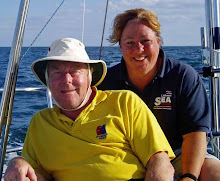
Our flight back to the UK necessitated a night in Tunis where it rained again. Our hotel bed mattresses were of straw or, perhaps, wood and our breakfast of bread and jam. What else do you expect for £8 a night each? Our chosen Restaurant Touristique (2 forks!!), the ‘Bella Italia’, turned out in fact to be a smoky, boisterous Muslim pub full of inebriated Tunisian men. The food from the limited menu on offer of bread and harissa vegetable starter and chicken and chips was good and the Magon 2005 wine was excellent. What is more it was extraordinarily cheap. The waiters, dressed in black waistcoats and bow ties were attentive and the clientele, although rowdy and many sheets to the wind, were very friendly to us. We had an unusual but very enjoyable evening.
Our short time in England overflowed with generous supper and party invitations from family and friends to such an extent that the number of times we eat at home could be counted on the fingers of one hand. We travelled, by car kindly lent to us by dear friends, to south east London to see Neal’s small family and to Gloucester, Guildford, Sherborne and Deal to spend time with Miggy’s somewhat extensive clan. It was very special to be present at Celia’s coming of age, our third niece to reach this milestone and gorgeous she looked too.
At 0645 on the first day of our stay those of you in the South may have heard Miggy on her BBC Radio Solent Julian Persons’ slot. Talking of Radio Solent at 0500 on Christmas Eve we got up to go to Radio Solent in Southampton for the Julian Clegg Show Christmas party. We were first up on air to talk about our exploits and for the remainder of our time at the studio we ate croissants, drank coffee and talked with other guests from a myriad of walks of life all of whom, like us, tell of their experiences on air as ‘Julian’s People’. In fact we felt frauds as it appeared we were the only couple who were on the programme by dint of enjoying ourselves. Everyone else seemed to be there because they helped others, represented a good cause, institution or charity or had knowledge or advice to impart to others.
The build up to Christmas was wonderful and included the parties that are now, after so long, a very pleasant ritual and midnight mass at the parish church where we sang carols heartily. Christmas day was as it should be, relaxed and lunch taken after the Queen was splendid in all respects with a perfectly cooked organic bronze turkey for which we had to take out a mortgage, wonderful roast spuds and parsnips, sprouts off the stalk and stuffing balls and cocktail sausages and the best ever gravy made from the turkey juices and crushed vegetables that formed a trivet under the turkey during cooking (A la Jamie Oliver). All this and good wine, cheese and brandy made for an afternoon to remember.
First footing to Yarmouth, Isle of Wight, by sail with friends was just what the doctor ordered as was lunch at the ‘Kings Head’.
We were utterly stunned by the price of everything in the UK and we winced as we paid enormous sums for food and drink at the supermarket and cringed as we spent fortunes for chandlery to maintain and improve Bella.
Our travel back to Tunisia was straightforward and stress-free. National Express coaches have to be congratulated in bypassing a closed M3 during our trip to Heathrow and being only ten minutes late and the Tunisair flight was comfortable and included a cooked in-flight meal with wine. BA offer a sandwich so we are told.
Travel by the Metro, or modern tram, in Tunis is efficient and cheap. The trains are frequent and manage to slice their way through the congested streets of the Capital where we spent our first night back in Tunisia with the sole purpose of visiting the Bardo Museum the following day prior to returning to Monastir and ‘Bella’.
The ‘Bardo’ has been the National Museum for more than a hundred years having previously served as the winter palace of the Bey, or King, of Tunis. The buildings, constructed mainly during the mid nineteenth century, comprise some fine rooms of state with exquisitely painted or fret worked ceilings and magnificent wall tiling all very much reminiscent of the decoration carried out some eight centuries earlier at Granada’s ‘Alhambra’ and similar palaces in Andalucía .

The collections exhibited at the Bardo range from the prehistory through the early history, and notably the Capsians from about 10,000BC, the Phoenicians from 1100BC, the Roman occupation from 146BC to 439AD, the Vandals and then the Muslims from 647AD to the current day.
The early history exhibits are interesting and include a pile of flints and bones, the ‘Hermaion of El Guettar’, considered to be one of the oldest ritual structures ever made by man, The Punic collection discovered mainly in Carthage and Kerkouane comprises statues, jewellery, coinage and other everyday artefacts. Perhaps the most famous relics of the Phoenicians are the collection of ‘Grimacing masks’ dating back to the 7th century BC. These masks were buried along with the deceased to ward off evil spirits.
Despite the wealth and diversity of the material from previous periods of history it is the Roman and Paleo-Christian collection for which the Museum is most famous and in particular its vast and impressive collection of mosaics. Many of the mosaic floors are intact and the magnificence of the detail and colour of the work carried out so long ago is outstanding they resemble intricate tapestries or carpets. It is a tribute to the Roman craftsmen and the Tunisians, or perhaps the French, who uncovered, removed, restored and placed the collection in the Museum that these works of art have survived for the 2000 years or so since their creation. Whether or not the fact that these treasures have been removed from their natural locations such as Carthage, El Gem, Dougga and Thuburbo Majus, amongst others, is open to question but at least they are safe, protected and in one place convenient for us to view.
We managed to catch our train to Sousse by the skin of our teeth despite the metro’s best efforts to delay us and two and a half hours later we were stowing our luggage aboard ‘Bella’, a task that we all but completed before going to eat good Ojja and Pizza and drink cheap wine at ‘Lostania’. How nice to be back aboard a shipshape ‘Bella’, to be in a warm environment and to be back in the land of low prices after an exorbitantly expensive and expansive Christmas in England.
Our short time in England overflowed with generous supper and party invitations from family and friends to such an extent that the number of times we eat at home could be counted on the fingers of one hand. We travelled, by car kindly lent to us by dear friends, to south east London to see Neal’s small family and to Gloucester, Guildford, Sherborne and Deal to spend time with Miggy’s somewhat extensive clan. It was very special to be present at Celia’s coming of age, our third niece to reach this milestone and gorgeous she looked too.
At 0645 on the first day of our stay those of you in the South may have heard Miggy on her BBC Radio Solent Julian Persons’ slot. Talking of Radio Solent at 0500 on Christmas Eve we got up to go to Radio Solent in Southampton for the Julian Clegg Show Christmas party. We were first up on air to talk about our exploits and for the remainder of our time at the studio we ate croissants, drank coffee and talked with other guests from a myriad of walks of life all of whom, like us, tell of their experiences on air as ‘Julian’s People’. In fact we felt frauds as it appeared we were the only couple who were on the programme by dint of enjoying ourselves. Everyone else seemed to be there because they helped others, represented a good cause, institution or charity or had knowledge or advice to impart to others.
The build up to Christmas was wonderful and included the parties that are now, after so long, a very pleasant ritual and midnight mass at the parish church where we sang carols heartily. Christmas day was as it should be, relaxed and lunch taken after the Queen was splendid in all respects with a perfectly cooked organic bronze turkey for which we had to take out a mortgage, wonderful roast spuds and parsnips, sprouts off the stalk and stuffing balls and cocktail sausages and the best ever gravy made from the turkey juices and crushed vegetables that formed a trivet under the turkey during cooking (A la Jamie Oliver). All this and good wine, cheese and brandy made for an afternoon to remember.
First footing to Yarmouth, Isle of Wight, by sail with friends was just what the doctor ordered as was lunch at the ‘Kings Head’.
We were utterly stunned by the price of everything in the UK and we winced as we paid enormous sums for food and drink at the supermarket and cringed as we spent fortunes for chandlery to maintain and improve Bella.
Our travel back to Tunisia was straightforward and stress-free. National Express coaches have to be congratulated in bypassing a closed M3 during our trip to Heathrow and being only ten minutes late and the Tunisair flight was comfortable and included a cooked in-flight meal with wine. BA offer a sandwich so we are told.
Travel by the Metro, or modern tram, in Tunis is efficient and cheap. The trains are frequent and manage to slice their way through the congested streets of the Capital where we spent our first night back in Tunisia with the sole purpose of visiting the Bardo Museum the following day prior to returning to Monastir and ‘Bella’.
The ‘Bardo’ has been the National Museum for more than a hundred years having previously served as the winter palace of the Bey, or King, of Tunis. The buildings, constructed mainly during the mid nineteenth century, comprise some fine rooms of state with exquisitely painted or fret worked ceilings and magnificent wall tiling all very much reminiscent of the decoration carried out some eight centuries earlier at Granada’s ‘Alhambra’ and similar palaces in Andalucía .
The collections exhibited at the Bardo range from the prehistory through the early history, and notably the Capsians from about 10,000BC, the Phoenicians from 1100BC, the Roman occupation from 146BC to 439AD, the Vandals and then the Muslims from 647AD to the current day.
The early history exhibits are interesting and include a pile of flints and bones, the ‘Hermaion of El Guettar’, considered to be one of the oldest ritual structures ever made by man, The Punic collection discovered mainly in Carthage and Kerkouane comprises statues, jewellery, coinage and other everyday artefacts. Perhaps the most famous relics of the Phoenicians are the collection of ‘Grimacing masks’ dating back to the 7th century BC. These masks were buried along with the deceased to ward off evil spirits.
Despite the wealth and diversity of the material from previous periods of history it is the Roman and Paleo-Christian collection for which the Museum is most famous and in particular its vast and impressive collection of mosaics. Many of the mosaic floors are intact and the magnificence of the detail and colour of the work carried out so long ago is outstanding they resemble intricate tapestries or carpets.
It is a tribute to the Roman craftsmen and the Tunisians, or perhaps the French, who uncovered, removed, restored and placed the collection in the Museum that these works of art have survived for the 2000 years or so since their creation. Whether or not the fact that these treasures have been removed from their natural locations such as Carthage, El Gem, Dougga and Thuburbo Majus, amongst others, is open to question but at least they are safe, protected and in one place convenient for us to view.We managed to catch our train to Sousse by the skin of our teeth despite the metro’s best efforts to delay us and two and a half hours later we were stowing our luggage aboard ‘Bella’, a task that we all but completed before going to eat good Ojja and Pizza and drink cheap wine at ‘Lostania’. How nice to be back aboard a shipshape ‘Bella’, to be in a warm environment and to be back in the land of low prices after an exorbitantly expensive and expansive Christmas in England.


 The Ribats, many of which were built as defensive fortresses and combined religious and military functions by assembling soldiers, mystics and even women under one roof. Monastir’s Ribat is one of the oldest and best preserved in Tunisia.
 His family’s Mausoleum with its twin minarets and gilt cupolas and the marble sarcophagus of the ex president dominate the Sidi el-Mezeri cemetery.
 One wonders what happened to the former resting places of those buried under this Memorial’s massive footprint. The remaining tombs and marabouts, or small mausoleums, are those of various spiritual men and in particular the Sufi master after whom the cemetery is named.


 The meat is ‘halal’, unhung and tough unless stored for a few days before cooking, marinated, bashed to within an inch of its life or cooked slowly in a casserole. There is, of course, no pork although the turkey or beef pâtés and salamis are sold as ‘jambon’! Nuts are plentiful, diverse and magnificent and the patisserie is artistic and very sweet. Surprisingly for people with such a sweet tooth granulated sugar is not readily available on the shelves except in cube form. Brown sugar is nonexistent. Two varieties of local strong cheese and a blue come close to matching their Italian counterparts for quality and taste.

 Tablecloths adorn the trestle tables, the charcoal in the industrial size BBQ roars and each couple passes around starters, salads, savouries and other dishes that they have prepared to accompany one’s individual barbecued fish or meat. Aperitifs and wine flow freely and great fun is had by all.
 Its vibrant historic Medina rises gently from the port and the narrow stepped alleyways host numerous craftsmen’s workshops, homes and souks. The walls of this sizeable Medina are virtually intact and house the striking 9th century Great Mosque which, together with the Ribat and the walls themselves, formed the town’s defences.
 Secondly, and more poignantly, the austere prayer hall with its relatively plain mihrab or niche that points to Mecca, and its highly decorated stepped wooden minbar from which the Imam delivers his homily during Friday prayers, conveyed an air of holiness beyond that felt in any mosque we have previously visited. Perhaps this is because, unlike other mosques, we were permitted to walk right to the threshold of the doors of the prayer hall and could therefore inspect the inside with three of our five senses rather than just the one.


 Built mainly during the 2nd to 5th centuries, it became a Roman colony wherein the citizens had equal rights to those of Rome. In the 3rd century Christians settled here and most of the churches date from that period. The ruins of this large town that have been excavated to date are very well preserved despite the fact that the Arab Muslims demolished and carted away many stones to build the Great Mosque in their Islamic city of Kairouan some 150 km away.


 We stopped in the middle of the 64 kilometre causeway to look at and walk on the flat carpet of salt crystals stretching further than the eye can see and shimmering and changing colour in the sunrise from white and grey to pink and pale green.


 The tradition goes back thousands of years but the houses the like of which we saw at Matmata date from the 19th century. In fact the house that we visited was the first opened to the public and the one where the matriarch, who died earlier this year, is featured in our guide book. The photograph of her in the guide is that which hangs on the wall of one of the bedrooms. We had a splendid traditional tomato soup, ‘brik’ (thin deep fried crispy pastry filled with a fried egg) and tender, tasty goat ‘couscous’ (steamed semolina grains served with meat or fish and vegetables in a tomato sauce) lunch at another, larger of these houses now occupied as a hotel. Talking of traditional Tunisian dishes I must mention ‘Harissa’; a paste made with red chilli and garlic often served with olive oil, olives and bread as a starter. It can be ferociously hot!
 They say that take off and landings are the tricky bits but we prevailed without mishap and enjoyed the experience immensely. The camel is a noble beast whose upturned nose makes it appear snooty and whose long eyelashes give it a certain allure as well as keeping the sand out of its eyes! The camel will drink a hundred and thirty litres of water in one sitting and this, stored in its hump, will last it for up to fourteen days before needing to drink again.